

Press release: Museum Boijmans Van Beuningen presents a major retrospective of work by pop art icon Marisol
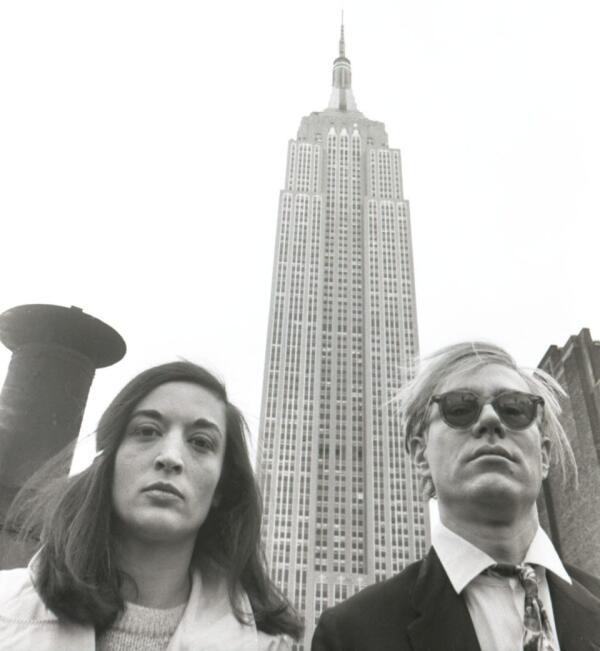
Rotterdam - She was one of the stars of the New York art scene in the 1960s, whose image appeared on the cover of leading magazines. She was friends with Andy Warhol, who famously described her as 'The first girl artist with glamour'. Yet today her name is virtually unknown among the general public. That is all about to change, however. The Venezuelan-American artist Marisol (1930-2016) is about to return to Rotterdam for the first time since 1968. In a show featuring over eighty international loans, Museum Boijmans Van Beuningen’s Depot will shine a spotlight on this icon of pop art, from her colourful wooden human figures to her strange underwater creatures and intimate drawings. Behind the many faces of Marisol lie reflections on issues like femininity, climate and America’s global power. Subjects that remain surprisingly topical, even after so many years. The exhibition Marisol will be on show from 9 October 2026 to 29 March 2027.
Who was Marisol?
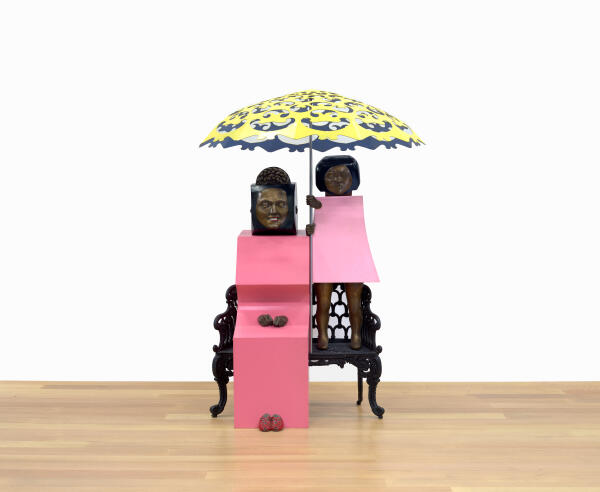
Marisol, born María Sol Escobar in Paris on 22 May 1930, grew up in Caracas and the United States. In her work she combined pop art, folk art, found objects and self-portraits, creating idiosyncratic, often satirical ensembles with a focus on identity. She used herself as a model, incorporating casts of her face and hands into life-sized sculptures to explore who she could be as an artist and as a woman in society.
‘I am the Venezuelan, born in France, living in Italy – that has an English car with North American plates and Swiss insurance – and they want to ask me what nationality I am.’ - Marisol
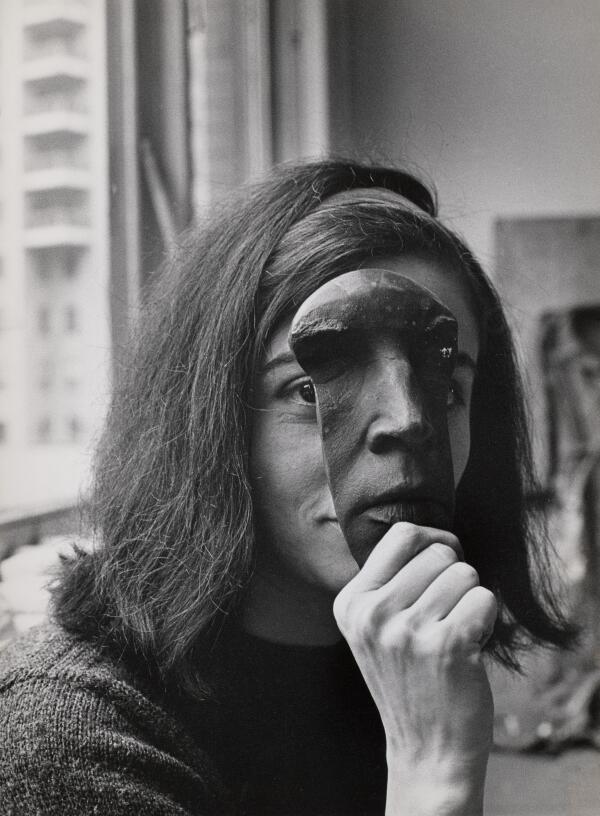
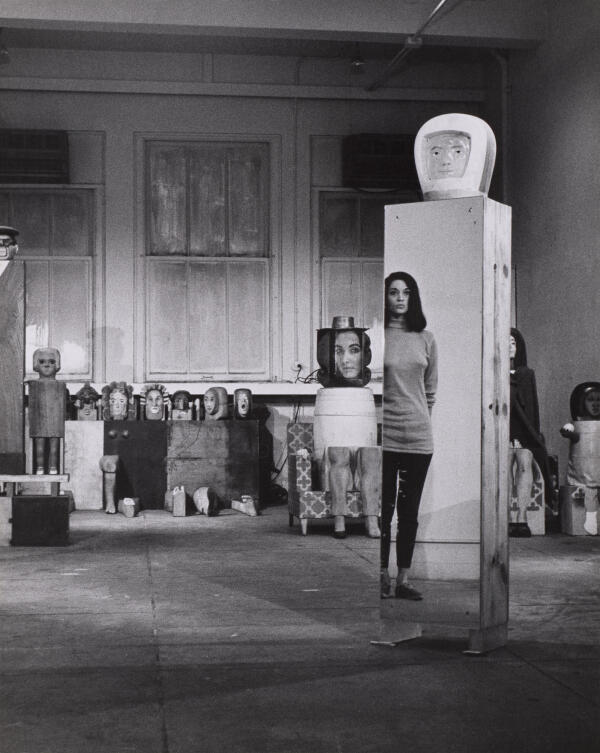
Boijmans x Marisol
The exhibition at the Depot will have an extra dimension, as the historical ties between the museum and Marisol go back to 1968. After the Venice Biennale, her work came to Rotterdam for her first solo museum show. Visitors will come face to face with the most important pieces in her body of work, just as they did 58 years ago. The show will include the wooden sculpture La visita (1964), a group portrait of three women that includes casts of and items of clothing belonging to the artist, and also Mi Mamá y Yo (1968), in which Marisol depicts herself as a child, with her mother. This was her favourite piece.
The Car: freedom on wheels
Another absolute highlight of the show will be The Car (1964), which Museum Boijmans Van Beuningen managed to acquire in 1972. Marisol made the half-scale blue Ford Falcon cabriolet with five passengers: young and old, man and woman, black and white, in a mix of generations and identities. All the passengers apart from the driver have the artist’s face. The car is full of surprising details, including headlights and a radio that actually work. In The Car Marisol explored what identity a woman could assume in the 1960s. At the same time, this artwork refers to the American dream of freedom, though opportunities for travel were limited for many non-white Americans and interracial relationships were still illegal in many states. Sixty years on, The Car carries new generations on a journey to freedom.
Iconic friends
Marisol met the still relatively unknown Andy Warhol on the New York art scene of the early 1960s. The two became close friends. She appears in Warhol’s experimental short films, and Marisol portrayed him in a sculpture. Several films will be included in the exhibition, including Kiss (1963). Although Warhol is known around the world today, Marisol was arguably the bigger star in the 1960s.
Fleeing to an underwater world
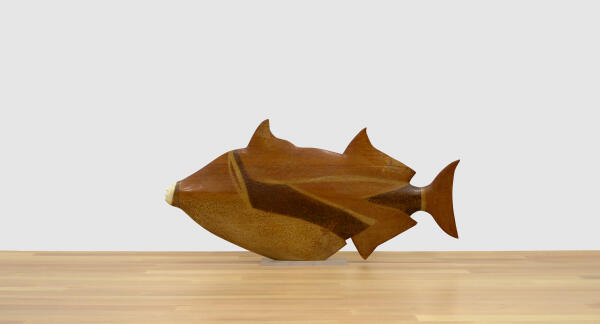
In the late 1960s Marisol withdrew from the art world, turning away from all the fame and attention. In Tahiti (French Polynesia) she discovered a passion for diving and became increasingly aware of environmental pollution. Two years later, she resurfaced in New York, full of inspiration. Now, she no longer produced human sculptures, but sculptural wooden fish and underwater creatures – a wake-up call about ecosystems at risk, and a critique of American power. Some of the sculptures resemble submarines used in the Cold War. The reviews were devastating. Despite several exhibitions over the following decades, this once celebrated artist gradually disappeared from view.
Loans
With only two sculptures in European collections (one of them at Museum Boijmans Van Beuningen), this exhibition will consist mainly of special loans from the United States, the majority of them from the Buffalo AKG Art Museum, which has stewardship of Marisol’s legacy.

Collaboration
Marisol is a cooperation with the Louisiana Museum of Modern Art, Humlebæk, Kunsthaus Zürich, Museum der Moderne Salzburg, and is created in collaboration with the Buffalo AKG Art Museum. Cathleen Chaffee, Charles Balbach Chief Curator, is contributing to the project as a curatorial partner representing the Buffalo AKG Art Museum.
Partners
The exhibition is sponsored by the VriendenLoterij lottery, Turing Foundation, the Blockbusterfonds, the Cultuurfonds, the Mondriaan Fund, Stichting Museum Boijmans Van Beuningen through a contribution from the bequest of Rine Coolen-Kalkman, Kring Van Eyck, Boijmans Business Club and Rotterdam City Council.